

CO₂ lasers are uniquely suited for processing glass and optical materials due to their strong absorption in the infrared. This enables highly localized heating and controlled energy deposition, allowing precise shaping, modification, and joining of glass components without introducing mechanical stress or contamination.
Compared to conventional methods, laser-based processing offers greater control, repeatability, and flexibility, particularly for complex geometries, non-spherical surfaces, and other sensitive optical applications.
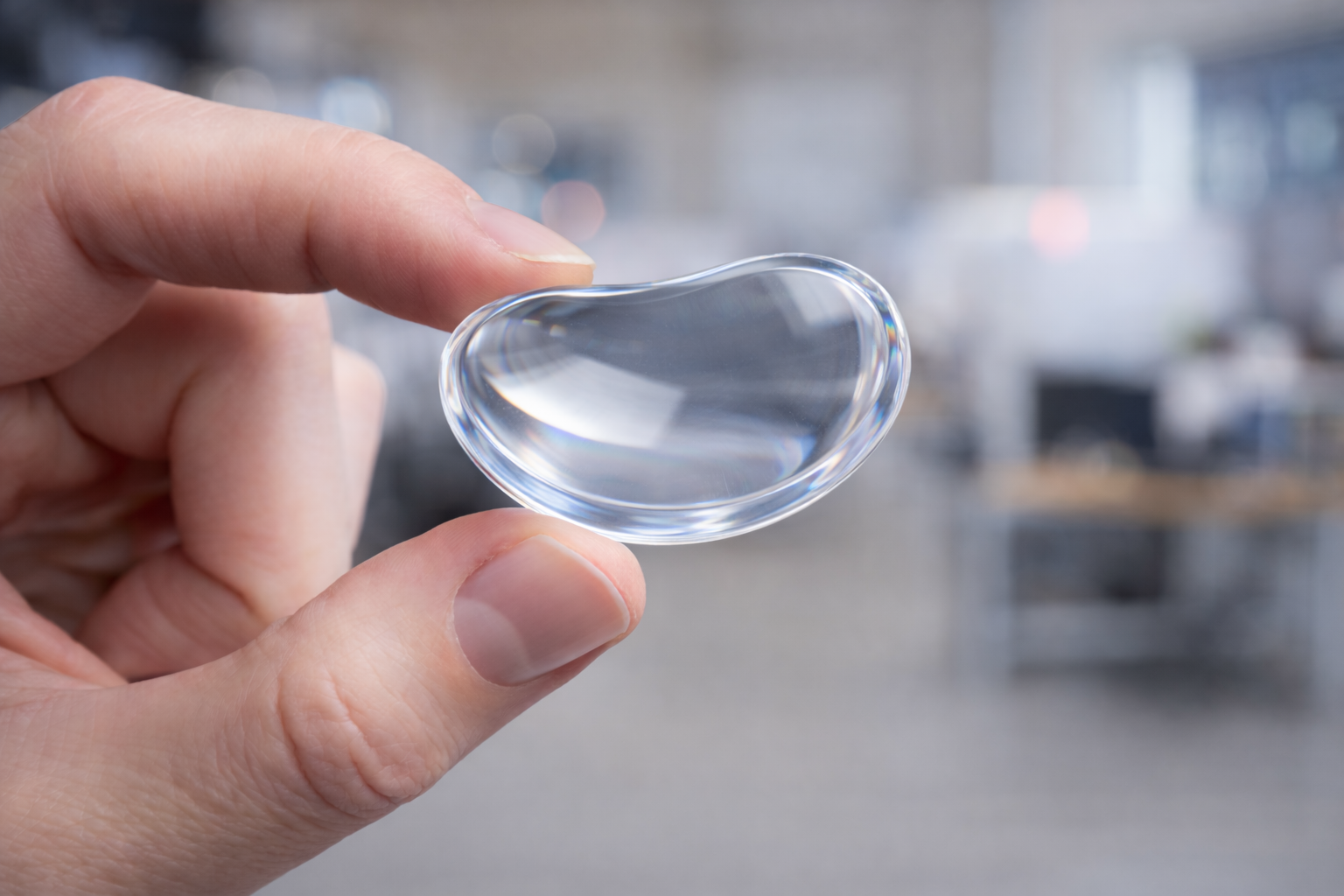
Surface Polishing
Selective laser polishing reduces surface roughness through controlled reflow of the material.
This process improves optical quality, minimizes scattering losses, and can increase damage thresholds compared to conventional mechanical polishing. It is particularly advantageous for non-spherical or freeform surfaces where traditional polishing methods become complex, time-consuming, or inconsistent.
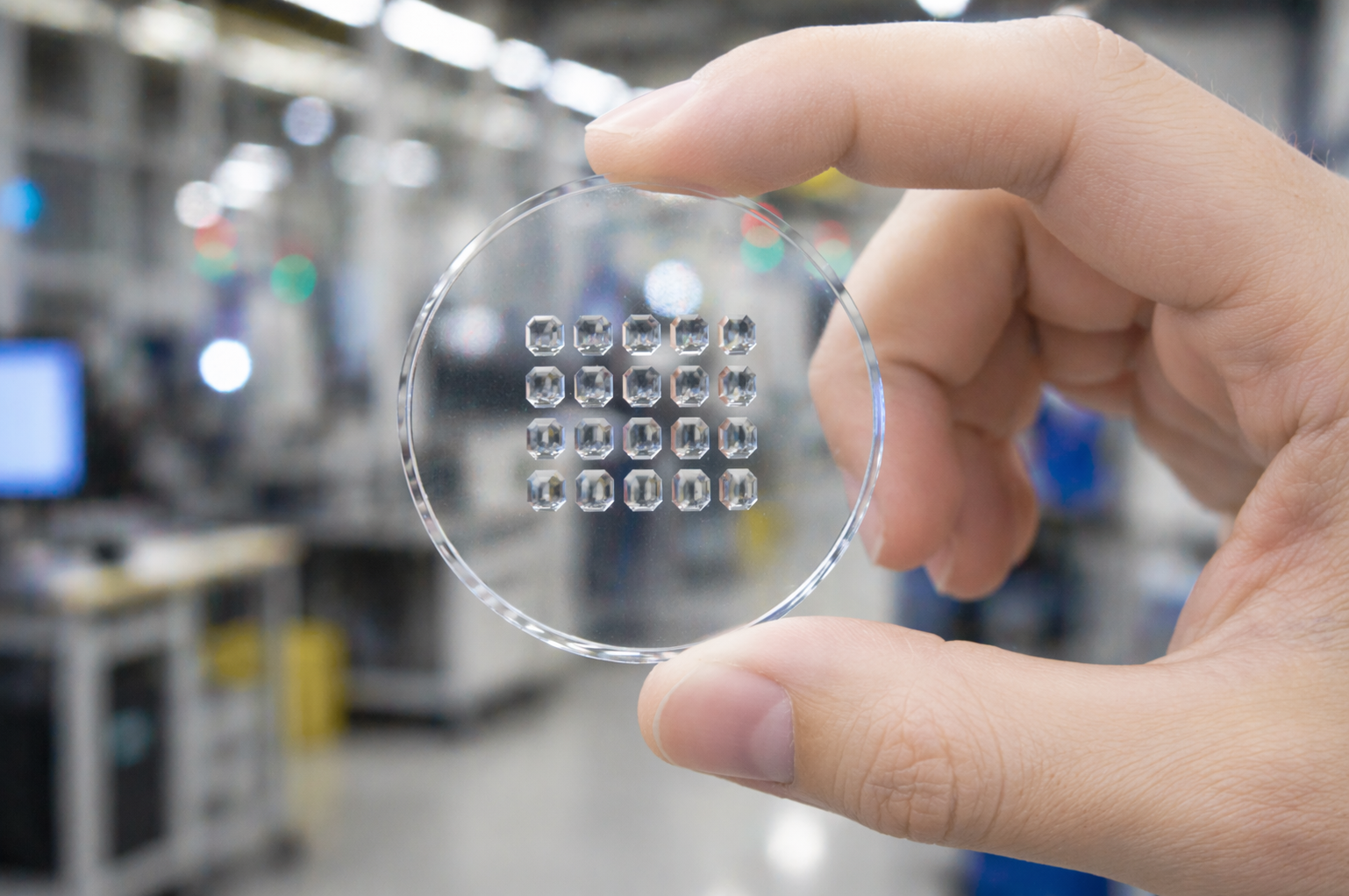
Optical Component Shaping
Precision shaping of glass components such as freeform lens surfaces, diffractive optical elements, beam shapers, fiber tapers, and integrated optical assemblies.
Localized CO₂ laser heating enables controlled material removal and reflow with nanometer-scale precision. The non-contact nature of the process eliminates tool wear and resulting in smooth geometries and high optical quality.
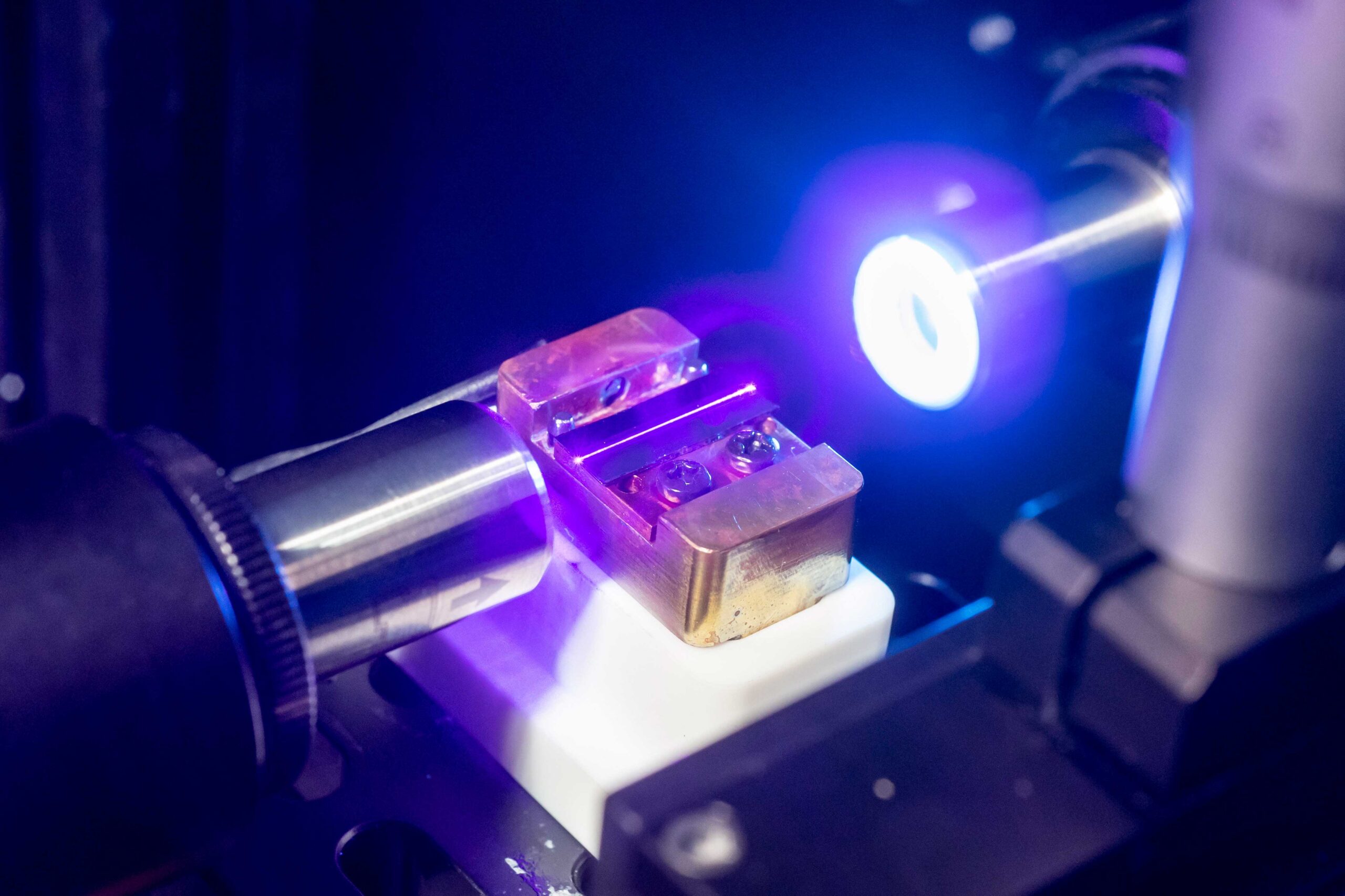
Photonic Packaging
Precision processing of glass components for photonic packaging, optical interconnects, and integrated fiber-to-chip assemblies.
CO₂ laser-based heating enables localized shaping and joining of glass features used in photonic and optoelectronic packaging. The non-contact process supports repeatable, alignment-critical manufacturing while minimizing contamination and mechanical stress in sensitive assemblies.
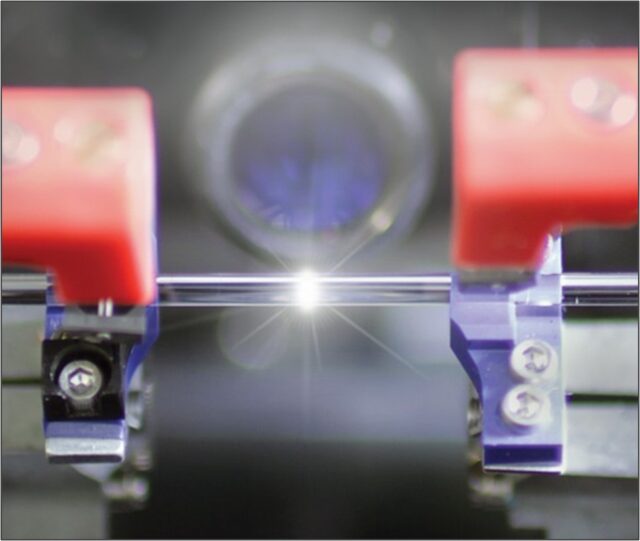
Precision Fiber Processing
Precision processing of optical fibers and small glass components such as tapers, end caps, lenses, splice regions, and specialty fiber assemblies.
Localized CO₂ laser heating enables controlled shaping, joining, and reflow of glass without physical contact. The process supports repeatable, low-contamination manufacturing with excellent thermal control, making it well suited for compact OEM fiber-processing systems.
Why Access Laser
All of these processes share a common requirement: the achievable result depends strongly on the stability and quality of the input laser beam.
Access Laser CO₂ systems are specifically engineered to deliver exceptional power stability, wavelength control, and beam quality. This enables consistent thermal interaction, precise energy delivery, and reduced process noise — all critical for repeatable, high-precision glass processing. Stable output power and single-wavelength operation support predictable material interaction, while excellent pointing stability and fast modulation capability enable dynamic control of the process.
- Stable output power for repeatable thermal processing
- High beam quality for precise energy delivery
- Wavelength selection optimized for glass interaction
- Fast modulation capability for dynamic process control